The worksheet
The Worksheet
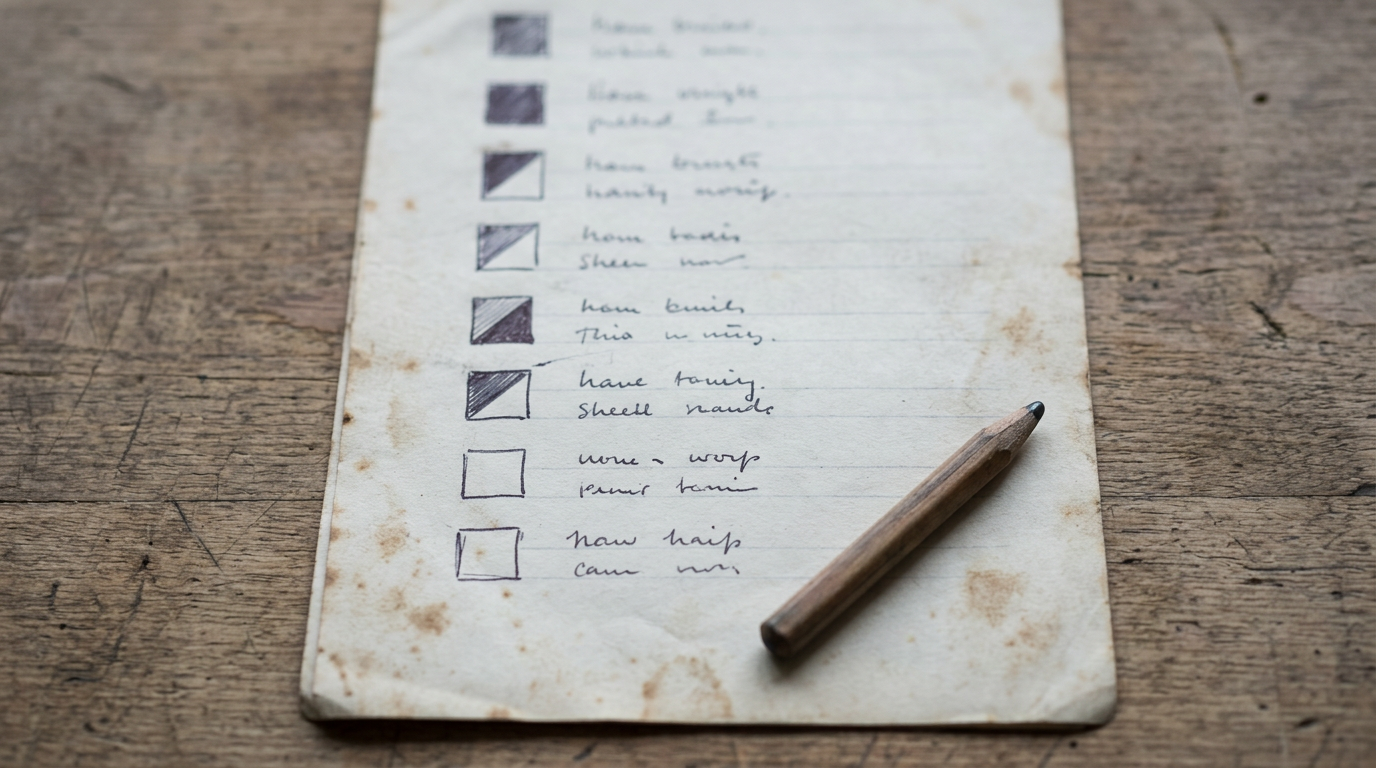
Eight lines. Three answered by lots, three answered by this counter, two answered by nobody. The third group is the reason the first two are worth reading.
The operator answers
A lot gives this in writing, and the hold repeats it back word for word
- What the lot says about its own perimeterThe operator answersThe required phrase, returned as a quotation rather than used as a claim by this counter
- The shuttle timetable, in writingThe operator answersHow often the van runs, from the lot rather than from anybody's estimate
- Access after the streets are clearedThe operator answersWhat the lot says happens to a parked car when the city has to clear snow around it
This counter answers
Paperwork, timing and the quote itself, which are the only things this counter controls
- The day rate if the return slipsThis counter answersThe number that applies to an extra day, written into the quote before you need it
- What the written quote containsThis counter answersNine things, every time, including the ones that make the quote look worse
- When each question has to be askedThis counter answersWhich questions still work the day before, and which stopped working a week ago
Nobody answers
Asked, and no straight answer comes back. The line says so instead of guessing
- Whether a roof stays freeNobody answersAsked of every lot with covered ground. No lot will commit, and here is the reply they give instead
- Whether anyone is there at nightNobody answersThe shortest answer on the sheet, and the one people most want to hear differently
How to read the squares
Each line carries a small square, and the square is never the only signal: the words beside it say the same thing.
- A filled square means a lot answers it, in writing, and the reservation repeats the answer with the date on it.
- A half filled square means this counter answers it, because it is paperwork, timing or the quote itself.
- An empty square means nobody answers it. The line has been put to lots and it comes back closed.
Why the empty squares stay on the sheet
Because a catalogue that only lists what it can deliver is an advertisement, and because the two closed questions are the two a reader most wants answered. Removing them would not make them go away; it would only move the disappointment to a worse moment.
Printing them does three useful things. It stops somebody spending a week chasing an answer that does not exist. It makes the six answerable lines credible, because a desk willing to print its failures is easier to believe about its successes. And it sets the honest ceiling of what any parking desk can offer, which is lower than most sites in this trade imply.
The order the lines are in
Not by importance and not by price. By who answers, oldest question first inside each group. The order is fixed and does not change from page to page, so two quotes and two visits read the same way.
What the worksheet is not
It is not a list of features. Nothing on it is included with anything, and nothing on it is bought. Each line is a question, and a reservation carries whichever answers came back plus a note of which questions failed.
It is also not a comparison of lots. Lots are not named here, and nothing on this site ranks one against another. Where two lots answer the same question differently, a quote prints both answers in the order they arrived, with dates.
Timing
Two of the eight lines have real deadlines, and one of them closes about a week before travel in winter. When each question has to be asked is the line for that, and it is worth reading before the others if you are inside a week.
- How a line gets confirmedThe exact questions this counter sends, and what it does with silence.
- What nobody confirmsBoth closed lines together, with what would have to change.
- Get a quoteThe same eight lines as a checklist on the request form.
- What is on offerThe claims sheet, in the same three group form as this page.